[personal profile] yosrathabet in [community profile] asianamlitfans


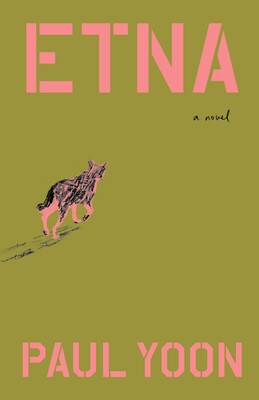
Paul Yoon’s Etna

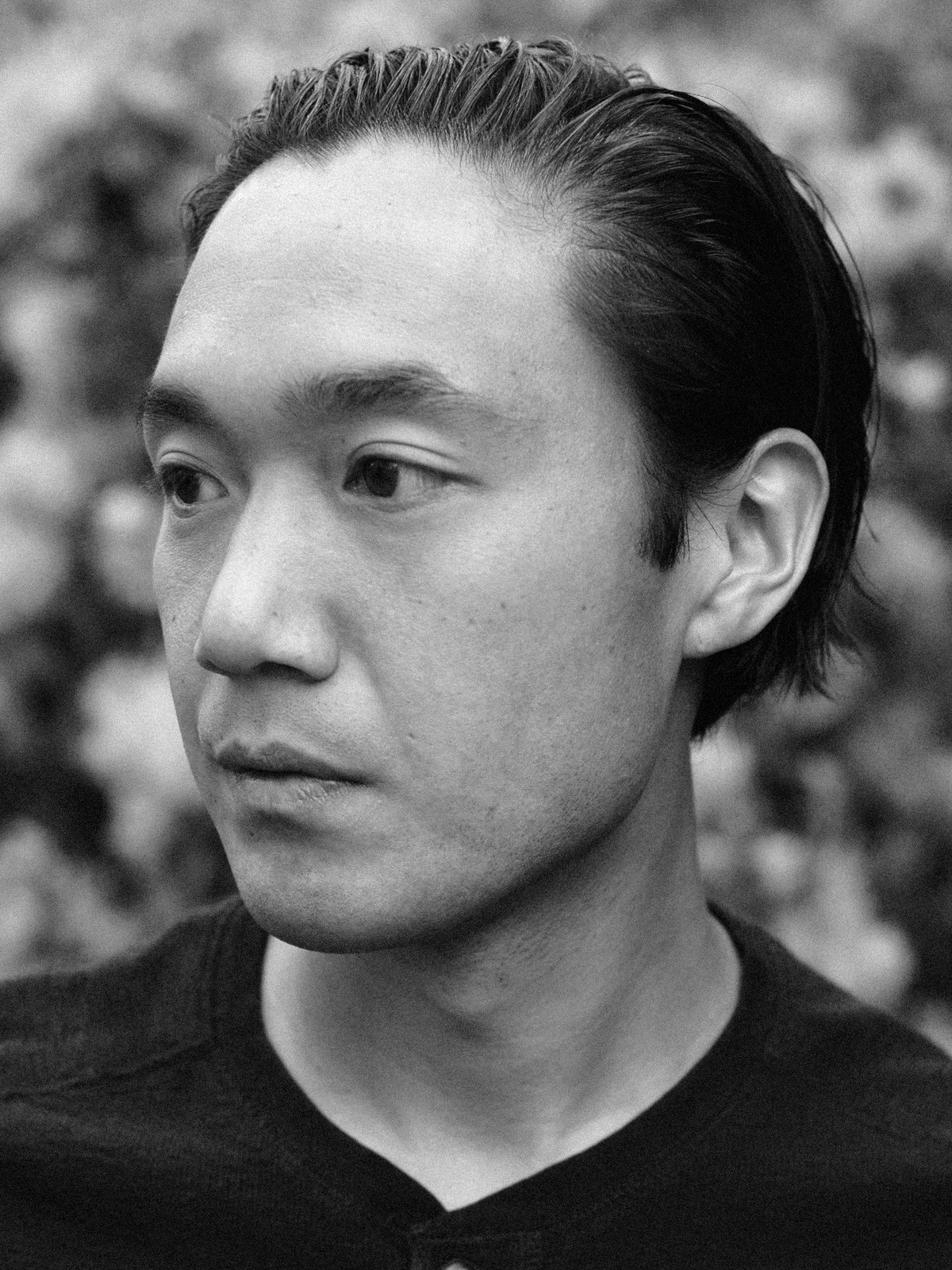
Paul Yoon


Written by: Prof. Stephen Sohn

Managing Editor: Yosra Thabet


Paul Yoon’s Etna (Scribner, 2026) might be one of the most devastating reads of the year, but I will say it does have a more uplifting ending than that description might lead you to believe. Yoon is the author of many books I love, including Once the Shore, Snow Hunters, and Run Me to Earth. His prose is always spare and lyrical, the kind that is reminiscent of the work of Julie Otsuka and Le Thi Diem Thuy. Let’s move toward that marketing description:

“Set in a fictional country in the present day, this is a story told through the eyes of an ex-military dog, Etna. After surviving years of a devastating war, Etna decides one night to leave the men he has fought alongside for years and return home—to the place where he was taken from when he was young, in the thin but persistent hope that if a home exists for him, it might be there. Thus begins an exhilarating odyssey told through the eyes of a dog as he traverses across ruined landscapes and fights to survive in a world that, even in peacetime, proves to be just as precarious. Along the way, he encounters other animals and humans who are attempting to figure out how to start again. What makes a life when there is no home to go back to? How do we begin to trust each other again after such profound loss? This is a novel about the power of an idea, about never giving up, and ultimately a novel about finding hope in the most dire of times.” For those of you around my age, the only other analogues I can think of are those novels that we sometimes read as children and adolescents, like Sheila Burnford’s The Incredible Journey or Richard Adams’s Watership Down. This novel does have a lot in common with these texts but definitely strikes out on its own with its inventive perspective. We follow Etna as a puppy, who is then recruited into the military by a special woman named Soojin. The speculative conceits of the novel emerge here because Soojin is able to communicate telepathically with dogs. Alongside another dog named Fuji, Etna is able to toil for many years, trying to detect bombs so that they may be defused or safely dismantled. Naturally, over time, both humans and dogs in their unit die violent deaths or are never heard from again. Eventually, the war ends, and Etna realizes that his place in the military is put into question, especially when Etna is one of the few remaining dogs. Etna realizes that the best decision is to leave and to embark on another journey: to go home. Etna misses the coast and misses the location where he was raised. The rest of the novel is really a quest plot, and I was surprised at how violent the novel ultimately gets, but it’s a landscape and place—one that is never named—that is still struggling in the wake of war; there is poverty and instability. Etna eventually makes friends with another dog, while also getting care for an injury he sustains from a kind man named Hong. The three eventually do meet up with Soojin, but the journey from there gets pretty challenging to the point where I wondered whether or not the concluding arc might have been something imagined in Etna’s own mind. Whatever the case, the ending was something that I personally desired for Etna, even if what Etna might have considered home could not be retained in the way that Etna remembered. This novel is the kind of posthuman depiction that those in animal studies would absolutely gravitate to, while general readers will find much to admire in Yoon’s audacious act of trying to inhabit the psychic space of a dog. Are there moments where you wonder if Yoon might have anthropomorphized an animal too much? Perhaps, but there is something comforting in knowing that a beloved domesticated animal, the kind that so many of us have owned or have been near to, might have such complex feelings and would do whatever is possible to find their way back to you or the place where you once lived. A real knockout that you can read in one sitting.


Buy the Book Here:


https://www.simonandschuster.com/books/Etna/Paul-Yoon/9781668020821

[personal profile] yosrathabet in [community profile] asianamlitfans

The Outer Country: A Novel

 
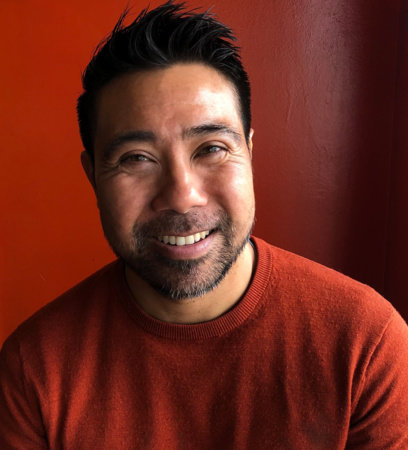
Davin Malasarn

Written by: Prof. Stephen Sohn

Managing Editor: Yosra Thabet


Davin Malasarn’s The Outer Country (One World, 2026) is one of the debuts I have been most looking forward to reading this year. The terrain of Asian American literature only gets more expansive as the years go by, and part of this trend is necessitated simply by the fact that some ethnic groups are publishing more and fleshing out areas of the field. Such is the case with Malasarn’s The Outer Country, which delves into Thai transnational and Thai American cultural contexts. Malasarn thus joins a still relatively modest group of Thai American and Thai diasporic writers who have previously published literature in the US (including but not limited to Cherry Cheva, Rattawut Lapcharoensap, Pitchaya Sudbanthad, and Ira Sukrungruang). Let’s get to the book’s marketing description: “Sisters Manda and Siripon have been divided by continents for years, estranged since their parents decided to send just one of their daughters from Phet Buri to America—the foreign land they call “the Outer Country.” As the eldest, Manda assumed she would be the first to go. When their parents chose Siripon, the more obedient second daughter, the decision sparked a lifetime of rivalry. The birth of Siripon’s son brings the sisters back together. Despite the disorientation of Los Angeles and the difficulty of sharing her sister’s home, Manda becomes a second mother to Ben, a precocious only child who fills her with fierce joy. But as Ben grows increasingly effeminate, her joy transforms to fear. Believing that the spirit of a dead girl has possessed her beloved nephew—and that her sister won’t do anything to fix matters—Manda and Ben’s father, Kamron, secretly arrange a Buddhist exorcism. The ceremony sets off a decade of anxiety-induced illness and bullying, even as the ritual burrows beyond Ben’s memory. For Ben to grow into his authentic self, he must accept his queerness and confront the scars of his past. He attempts to navigate his family’s tense relationships and live amidst the damage. But how long can they all go on before the truths are uncovered? From the mangrove forests of Thailand to a modest stucco house in Los Angeles to the sandstone quadrangles of Stanford, The Outer Country is at once epic and intimate in scope, a breathtaking journey across cultures and generations.” At the core of the story is precisely the scene of the Buddhist exorcism, which tracks across Ben’s life. The reverberations of that moment become clear: Ben internalizes that event as a trauma and acts it out routinely in any stressful circumstance, and he vomits. Throughout his young life and well into his late teens, Ben will suffer from this psychosomatic manifestation, clearly still dealing with not only the violence of the ritual but his internalized knowledge that something may be wrong with him. Of course, nothing is wrong with him. He just happens to have some queer yearnings, which, as many of us see in Asian American transnational contexts, become seen as something pathological. Malasarn is careful enough with the social dimensions of Thailand to let readers know that cultural contexts have always involved the flexibility of gender dimensions through the subjective positionality of the kathoey, a kind of third sex figuration. Yet, Ben doesn’t identify as kathoey at any point, nor does that kind of subjectivity traffic in the American context where Ben resides. Thus, at its core, Malasarn’s text is an ethnic bildungsroman, a queer coming-of-age story embedded in Thai American culture. Ben is not the only major character. His mother, Siripon; Siripon’s husband Kamron, and Siripon’s sister Manda loom large. The challenge that this text sets up is that Manda is childless and becomes attached to Ben in a way that is both heartfelt yet complicated. Indeed, the American nuclear family dynamics end up casting Manda as a kind of excess that must be mediated in a variety of ways. Manda’s characterization is probably the most challenging of this text, and it is this figure that I most gravitated to in some ways because there seems to be little place for her in the United States. The transnational dimensions of this novel are likewise rich, as Ben, Siripon, and Manda must maintain their extended family entanglements, which necessarily include aging and infirm elders. This aspect of the text showcases Malasarn’s ability to weave together disparate plot points with the intent that Siripon and Manda aren’t going to let their ethnic homeland become some completely distant memory. When I wrote my second book, there weren’t many narrative plots like that one Malasarn imagines: Ben grows up in the shadow of AIDS; when he comes out to his mother, it doesn’t seem to be the biggest deal, even as it is clear that there will be some bumps in the road in the future. Perhaps the biggest and most welcome surprise in this text is that Ben’s queerness seems assured, even amid campus protests for queer equality and the ethnic rituals that suggest that his same-sex orientations are problematic. In this way, the major triumph in this text is that it imagines the possibility for Asian American queer yearnings even at a point in time where it would seem unimaginable. The political heft of this text appears then in the way that it routes a path of possibility for Asian American queers, who seek to desire and to have their desires constitutively recognized. This novel is thus one of the few that might spotlight something that might be called an Asian American queer optimism. A gleaming debut filled with multidimensional characters and a plot of Asian American queer fulfillments rarely seen.


Buy the Book Here:


https://www.barnesandnoble.com/w/the-outer-country-davin-malasarn/1148002813?ean=9780593731659


Profile

pylduck: (Default)
pylduck

July 2011

S M T W T F S
     12
3456789
10111213141516
17181920212223
242526 27282930
31      

Style Credit

Expand Cut Tags

No cut tags
Page generated Sep. 23rd, 2026 08:29 pm
Powered by Dreamwidth Studios